In the growth models of Harrod and Domar, the rate of capital accumulation plays a crucial role in the determination of economic growth. The problem of present-day mature economies lies in averting both secular stagnation and secular inflation.
The Harrod-Domar growth model is an economic model that explains the rate of growth of a country’s economy by focusing on the levels of saving and productivity of capital.
The first and the simplest model of growth—the Harrod-DomarModel—is the direct outcome of projection of the short-run Keynesian analysis into the long-run.
Qualitative inquiry is rich in personal interaction between participant and researcher. The researcher is an instrument (Creswell, 1998) and the participant is an active sharer in the process and, in some cases, the final interpretation of the inferences, as well. This discussion considers the issues related to conducting qualitative inquiries in online settings and the implications for using ...
The Harrod–Domar model is an early economic model formulating the dynamics of economic growth. It focuses particularly on the roles of savings and investment, as well as the importance of the capital-output ratio.
Lana Martin—Variability in Social Dynamics of Texas Coastal Hunter-Gatherer Populations: An Analysis of the Crestmont Site (41WH39) Burial Inclusions Matthew Piscitelli and Rebecca Storey—Deciphering the Dead: Mortuary Analysis of Burials from Classic Period K’axob Joshua Wells and Carlina de la Cova—When the Corn Mothers Came to Stay ...
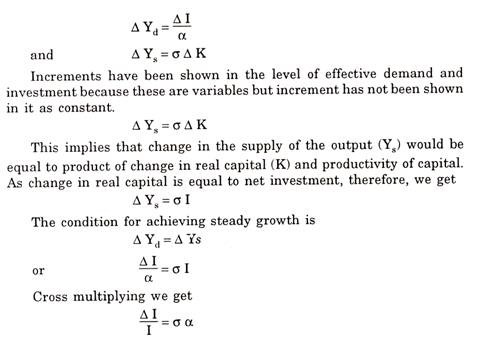
Let us make an in-depth study of the subject matter, assumptions, explanation and diagrammatic representation of the Domarmodel of growth. Domar presented his growth model in his pioneer work expansion and employment in 1947.
Dan Johnson December 4, 2025 (Age 81) Virginia Beach, Virginia Special Forces Lieutenant Colonel Dan Johnson, a distinguished veteran and beloved family man, passed away on December 4, 2025, at the...
The Harrod-Domarmodel is a classical economic growth model that explains the relationship between economic growth, capital accumulation, and savings. The model was developed by economists Roy Harrod and Evsey Domar in the 1930s and 1940s.